June 11, 2018

What’s Special in the Rainy Season?

The rainy season has come. This is the beginning of a hot and humid summer - a Japanese summer! Have you experienced it before? According to the weather forecast, it will be a hotter summer this year than last.

Anyway, I feel like eating something sour in this hot and humid season. After I talk about this topic to friends from a variety of places, I realise that more sour taste lovers exist in this country than in many other places. At least that is my point of view.

I think that to eat sour and vinegary food is not only good for a change but also may help keep us very healthy.

At this time of year, in the vegetable corner of supermarkets or vegetable stores, we can see Ume-plum, Rakkyo, Shiso and Shin Shoga (young ginger). Whenever I find these vegetables, I realize the rainy season has been coming and it’s time to prepare for a humid summer. I make time and buy a large bottle of vinegar to make pickles and juice. I pickle Rakkyo and Shin Shoga in sweetened vinegar and wait three to seven days. Pickled Rakkyo and Shin Shoga can be kept for a year, if you fasten the cap on the jar tightly.  In the early years, these foods were always preserved. You could see pickled Rakkyo beside the curry rice dish, and Sliced Shin Shoga that is called ‘Gari’ in Japanese and offered with Sushi. These things will make your mouth and body feel refreshed. These foods also go well with beer or sake.

 Ume-boshi is also made in this season. Ume-boshi is pickled with salt and tastes very sour. In addition, we make plum wine, plum juice and Shiso juice. Every day I check the color and smell. Sometimes I shake the jars containing the plum and shiso. This daily care may be meaningful . I believe that greeting my jars gives it a good flavor. This is my secret pleasure in this season.

How do you spend this season?


(by Naoko)


How do you like the healthful summer eating habit of Japan? If you like it, you can experience them in our Course C. Please contact us from here and join our free walking tours!   

May 29, 2018

Something cold for tonight? How about some ’tataki'?

Hot and humid season is just around the corner in Japan, and don't you feel like having some cold dishes for tonight? How about a brief trip to your neighborhood izakaya, for some sashimi and cold sake? Mmm, sounds great! ... [At the counter seat at an izakaya.] Okay, let's check out what they have in their menu .... Sashimi moriawase, that means assorted sashimi, ... maguro, my favorite, and what's this one, 'aji-no-tataki'? ...

There are, actually, two types of 'tataki.' Before getting into the meat of the topic, let me explain some etymology of the term. 'tataki 叩き' is the noun form of the verb 'tataku 叩く,' which means 'to beat' or 'to hit.' And 'tataki' here means a cooking method to prepare fish, beef, or chicken, or food prepared in this way. So why the name 'tataki,' and why two types of them exist?

Aji no tataki (Horse Mackerel)
First 'tataki' is minced fish meat, and the most popular example is 'aji no tataki,' chopped raw horse mackerel. Raw fish, mostly blueback fishes like horse mackerel or flying fish, is chopped with seasonings such as ginger and green onion. They are chopped together to make the seasoning spread into every part of the flesh. Here, the meat is 'beaten' with the cutting edge of the cooking knife.

A dish called 'namerou' is a variation of this type of 'tataki.' It's a fishermen's delight in the Chiba Prefecture, a 'tataki' chopped well with miso and sake. If you find it in the menu, you should give it a try.

Katsuo no tataki (Bonito)

Gyu or Gyuniku no tataki (Beef)
Second 'tataki' looks somewhat similar to the roast beef in the western cuisine. Its most popular example is 'katsuo no tataki,' lightly roasted bonito. Fish, beef, or chicken is slightly roasted, with its inside still raw. In its preparation, the meat is 'beaten' with hands or knife, to blend condiments well into its meat.


Bonito 'tataki' is a specialty of the Kouchi Prefecture, but now can be found in restaurants nationwide. It is served with soy-sauce and citrus flavored sauce, and condiments such as green onions, ginger, and sometimes sliced fresh garlic. Beef and chicken 'tataki' is also popular.

So, now, let's just enjoy some tataki! It goes so well with cold sake!

(by Ko)

Reference: 森口稔 編著『英語で案内する 日本の伝統・大衆文化辞典』(三省堂, 2018)
MORIGUCHI, Minoru, ed., A Dictionary of Japan in English (Sanseido, 2018)
http://urx2.nu/K60P


May 20, 2018

Visit Kiyosumi Garden and Enjoy the Beauty of Ryo-Tei, Tea House


Let me introduce my favorite place in Koto Ward, it is Kiyosumi Garden, where is in 3 minutes walking distance from Kiyosumi-Shirakawa Station.  A very popular traditional Japanese stroll garden,  covers about 81,000 square meters.

According to the history, this garden was a residence of the famous marchant, Kinokuniya Bunzaemon in the Early 17th century.  In the late 18th century, Mr. Yataro Iwasaki, the founder of Mitsubishi Group, obtained the land and rebuilt to use it for the enjoyment of his employees and entertainment of important guests. The hills and waterless waterfalls were constructed and the 52 huge beautiful rocks from all over Japan were brought in by their steamship.  In later years, the waters of the Sumida-River were brought into the grounds to enlarge the pond. The garden provided refuge from the fires of the Great Kanto earthquake of the early 19th century. After that, Mitsubishi group contributed this garden to Tokyo City and after some repair works it was opened to the public.  In 1979, this garden was designated as Tokyo Metropolitan "Place of Scenic Beauty."


Ryo-Tei  涼亭, Tea House (Cool House)

My most favorite place in this garden is Ryo-Tei, it means Cool House in English, a Sukiya-designed Tea House building, designed by Mr. Katsuya Yasuoka, an architecture for Mitsubishi Group in the early 19th century.
Sukiya-designed is a one type of Japanese residential architectural style. Suki means refined, well cultivated taste and elegant pursuits and characterized by a use of natural materials.  It is an authentic Japanese Tea House facing the pond, has a beautiful view from it and it is like a symbol of this garden. Main room is a 27-tatami room with a toilet. It is designated Tokyo Metropolitan Selected History Building.


Now, Ryo-Tei is opened for everyone as an assembling facility, it is used to various kinds of occasions, such as tea ceremony, flower arrangements, Yoga class and many other traditional events as well as  party occasions.  You can bring your own foods and drinks, catering services are also available. 

For your reference, the rental fee is 5,500 yen for 3.5 hours, you can use it at the three-time slots in a day as morning (10:00-13:30), afternoon (14:00-17:30) and evening (18:00-21:30).  It must be booked six months previously. 

I like to visit Ryo-Tei at day time in a sunny day to see the various kinds of waterfront creatures, such as wild birds and turtles, squirrels, carps and many others, moving around in the ponds. I always enjoy to see them, it makes me feel so comfortable and relaxing.

Let' s enjoy the Scenic Beauty of Kiyosumi Garden!!

(by Yukie)


How do you like the walking in Kiyosumi Teien garden? If you like it, please contact us from here and join our free walking tours!   


May 11, 2018

Walking in Kameido


Last month, we planed a special tour to walk around Kameido area, visit two big shrines, and watch beautiful wisteria blossom, but unfortunately we didn’t get any guests on that day. It was quite sorry, but we didn’t give up easily. Our two guides walked along the course on that day and found some interesting points for a next opportunity. In this blog article, we would like to introduce the tour course.

(1)  Kameido Gyoza

Do you know “gyoza” dumpling? This is a unique restaurant which serve only gyoza dumpling. When you visit the restaurant and sit at a table, immediately two dishes of gyoza dumpling are served without (and before placing) an order. This is the unique rule of this restaurant. We don’t need to place an order, because gyoza is the only food menu they serve. Of course they provide some beverages, such as beer, sake, or some soft drinks. After finishing the first gyoza, you can order another dish of gyoza. The price of gyoza is quite reasonable, just 250 yen per dish.


(2)  Katori Shrine

One of the two big shrines in Kameido area. Originally it is a shrine which enshrines a deity of martial arts, but recently it is famous as a shrine for all sports. Famous sport athletes visit this shrine before their games. This time we found an interesting statue there. The statue of “daikon,” a white big radish. There are many kinds of white radishes in Japan. “Kameido daikon” is one of them. Now Kameido is a bustling town and dense populated area, but once it was a quiet suburban area and there were many vegetable fields and was famous for producing delicious Kameido daikon. This statue was built as a memorial to the daikon radish. There are many statues all over Japan, but a statue for a vegetable is quite rare and interesting.


(3)  Kameido Tenjin Shrine

Another and the biggest shrine in this area. This shrine was built to enshrine a famous historical bureaucrat, Michizane Sugawara (845-903). He was quite smart and competent, so he posthumously became a deity of scholarship. This shrine is also famous for beautiful wisteria flowers. We could enjoy the lovely light purple flowers. In February, we enjoy another blossom, plums.


(4)  Rice cracker “senbei” toasting

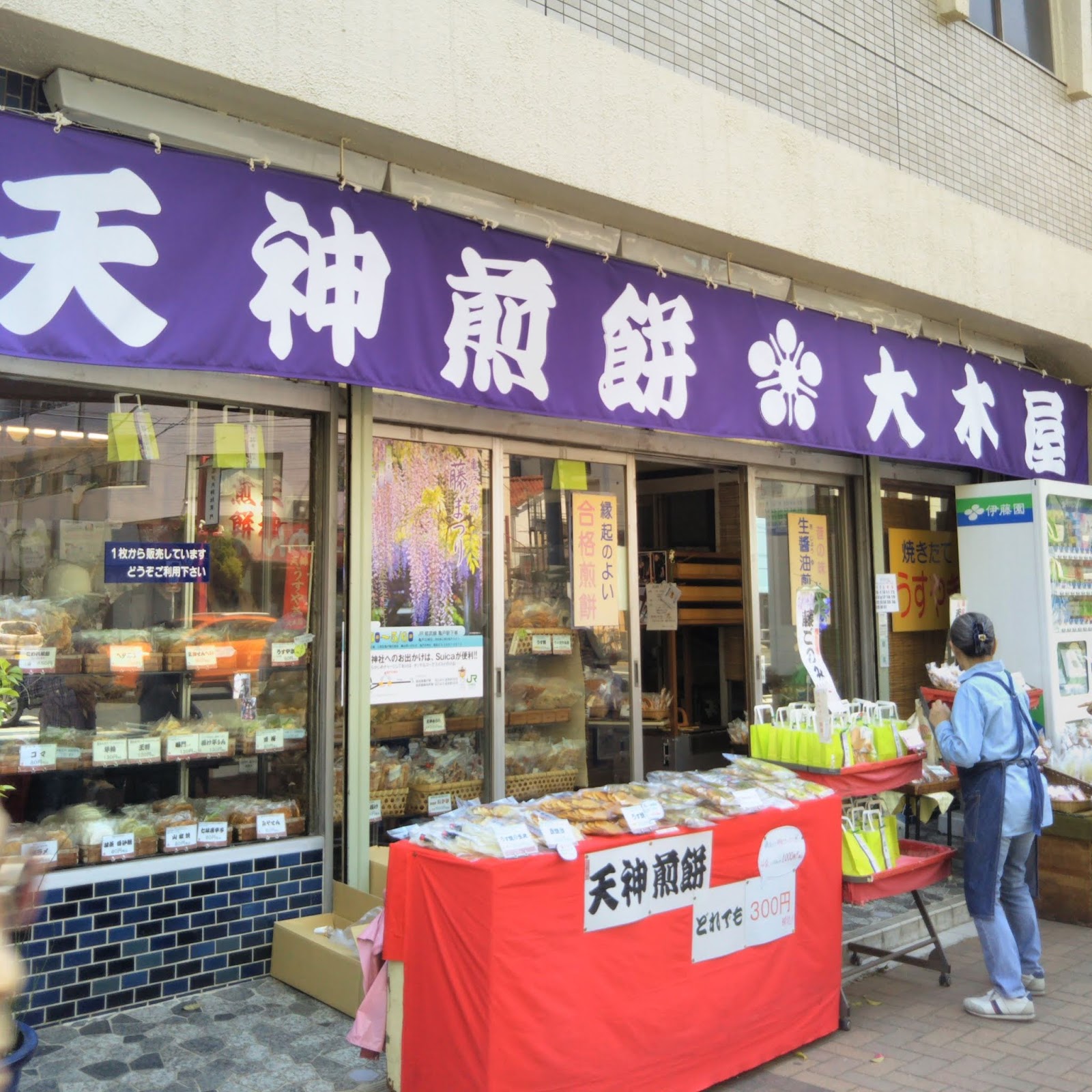
After visiting the shrines, we dropped by a rice cracker shop. This is an interesting shop. You can have a unique experience here, “rice cracker toasting! Usually, we buy made-up rice crackers at these kind of shops, but here we can try to toast rice crackers by ourselves and eat just after toasting. The shopkeeper told us that this is the only shop where we can try to toast rice crackers!


(by Chinami)

How do you like the walking in Kameido? If you like it, please contact us from here and join our free walking tours!   


March 16, 2018

Tokyo University of Marine Science and Technology -- Meiji-Maru Maritime Museum


Let me introduce Tokyo University of Marine Science and Technology and the maritime museum.

About 10min. walk to the south from Monzen Nakacho metro station, you will reach the University.

It’s only university in Japan specialized in maritime science and technology.  Origin of the university dates back to 19th century, started as two different schools specialized in fisheries and mercantile marine. Two schools were integrated into one comprehensive university in 2003.

Meiji-maru Maritime Museum

I would like to recommend you visiting a historical ship called “Meiji-maru” which was built in 1874 in Glasgow of UK as a first iron ship of Japan.  The main function of the ship was to transport materials to maintain lighthouses located throughout Japan.

Since the ship was well equipped and gorgeously furnished with a salon and special guest room, it served as a royal ship as well. The Emperor Meiji and high-ranking government officials boarded this ship for important occasions.
       
After the Meiji-maru served as maintenance ship for lighthouses for 20years, it was handed over to the mercantile marine school which is the predecessor of the present Tokyo University of Marine Science and Technology.  After that the ship was moored in campus ground and served as training facility for students for about 50years.

This is only iron ship existing in Japan and registered as an important cultural asset of Japan.

The ship is now open to the public as a maritime museum.
Open on Tuesday and Thursday, 1st & 3rd Saturday of month from 10:00 to 15:00.
A guided tour is available (Guided only in Japanese)

This is a steamship with three masts and gorgeous cabins.  I’m certain that you will enjoy its majestic appearance and feel cruising in the Meiji era.

You also can enjoy magnificent view of high-rise buildings of Toyosu district on board. The contrast of old steamship and high-rise buildings in blue sky will makes you refreshed.

The ship is surrounded by many cherry trees so that you will enjoy nice view of pink blossoms in season by the ship. Cherry blossom festival takes place from March 24th to April 1st in the campus and the ship will be illuminated at night during the festival.
 (by Haruko)

March 3, 2018

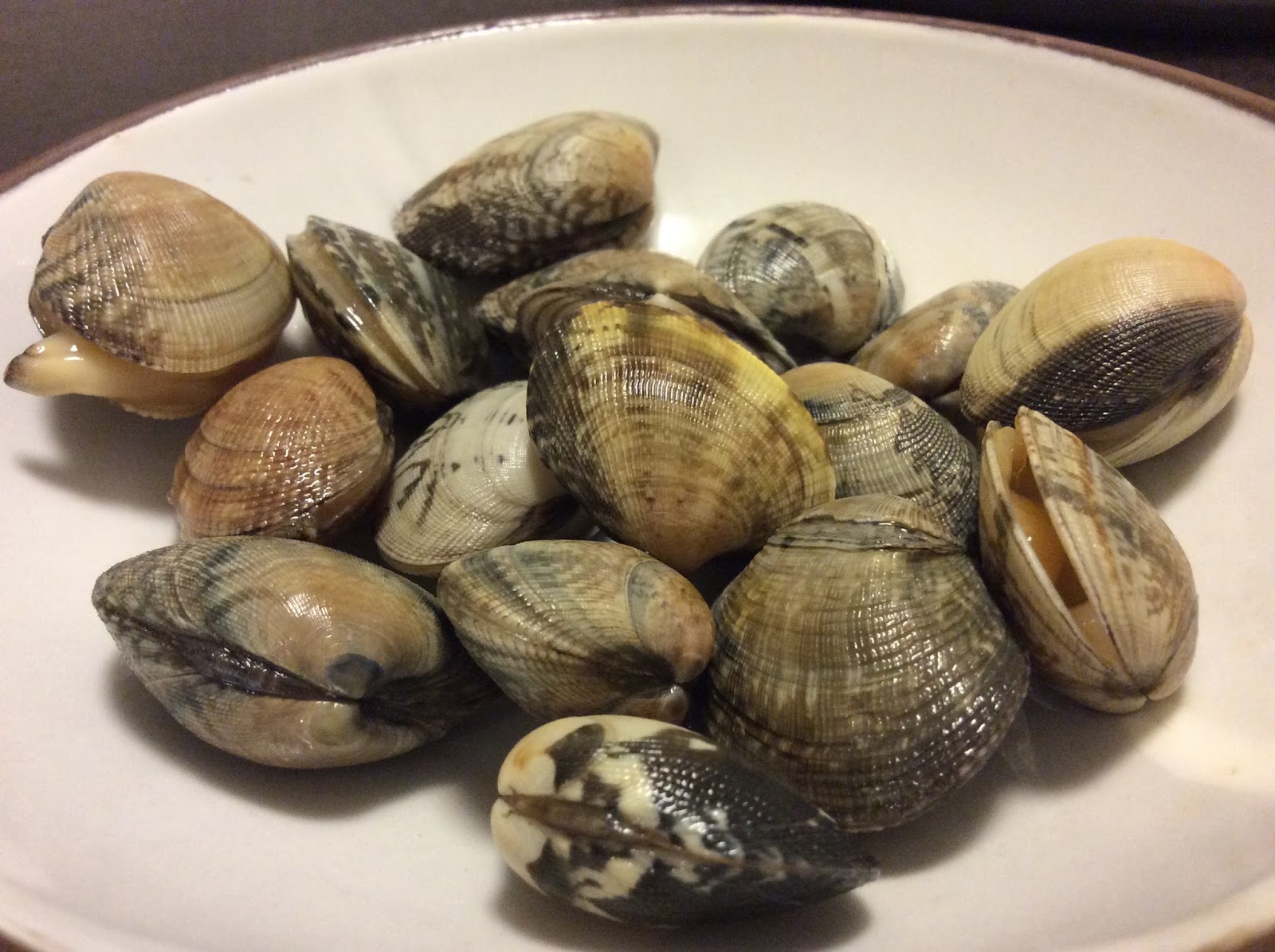
Asari clams are in season now !

This is our local cuisine, Fukagawa-meshi.
Asari clams (short-neck clams) are cooked with green onions and
seasoned with miso, then served over a bowl of rice.

In Edo Period, this Fukagawa area used to be a sand bank so that large quantities
of clams was caught.

Originally, this dish was the fishermen’s cooking. Since it could be cooked and
eaten quickly during their work and it was very tasty, Fukagawa-meshi
became popular around here.


This is the other type of Fukagawa-meshi.

Asari clams are cooked with rice and seasoned with soy sauce.
It is said that it was arranged by the carpenters so that it could be packed in the lunch boxes.


Although you can eat Fukagawa-meshi throughout the year, Asari clams are
especially delicious during spring season.

There are many restaurants around here in Fukagawa which serve
Fukagawa-meshi.

Why don’t you try it after our tour ?

(by Kaori)

February 20, 2018

Sumida-gawa Terrace walking in Koto City


As you may know, the Sumida-gawa river is one of famous rivers in Tokyo.
Sumida-gawa runs through Tokyo for 27 kilometers, under 26 bridges.
On the both sides of the river, Sumida-gawa Terrace is constructed, and provides
walking and jogging course. The course starts at Azuma-bashi Bridge, and finishes at Kachidoki-bashi Bridge. The length of Sumida-gawa Terrace is currently 28km.

Sumida-gawa river flows west side of Koto city, so let me introduce Sumida-gawa
Terrace walking in Koto city.
D:\Users\Yumi\desktop\YumiData\2018\Guide\KEV\201802_ブログ担当\写真\Downsized\隅田川テラス_320.jpg
This picture shows Sumida-gawa terrace view from Shin-Ohashi bridge.

Shin-Ohashi bridge is located at the 5 minutes-walking from Morishita station of Toei Subway. It is a very simple shaped bridge.
D:\Users\Yumi\desktop\YumiData\2018\Guide\KEV\201802_ブログ担当\写真\Downsized\新大橋_320.jpg

When you walk on Sumida-gawa terrace towards the downstream, you can see another bridge called Mannen-bashi bridge. The original Mannen-bashi bridge was constructed in the 17th century. Current bridge was re-constructed in 1930.
D:\Users\Yumi\desktop\YumiData\2018\Guide\KEV\201802_ブログ担当\写真\Downsized\萬年橋_320.jpg


http://jgc-shiga.co.jp/wp-content/uploads/2018/02/%E5%8C%97%E6%96%8E%E6%B7%B1%E5%B7%9D%E8%90%AC%E5%B9%B4%E6%A9%8B%E4%B8%8B.jpg
The original bridge was drawn by Katsushika Hokusai,
one of very famous ukiyo-e artist.

A few minutes walking from Mannen-bashi Bridge takes you to another bridge.
D:\Users\Yumi\desktop\YumiData\2018\Guide\KEV\201802_ブログ担当\写真\Downsized\清洲橋_320.jpg
This is Kiyosu-bashi Bridge.

Kiyosu-bashi Bridge is a suspension bridge. It is modeled after a suspension bridge in Cologne, Germany once considered the world’s most beautiful bridge. The Cologne bridge having been destroyed, its “world’s most beautiful” form can be seen only in the Kiyosu-bashi Bridge.

This bridge was designated as Important Cultural Properties by the national
government.
D:\Users\Yumi\desktop\YumiData\2018\Guide\KEV\201802_ブログ担当\写真\Downsized\清洲橋2_320.jpg

You can also see the beautiful Kiyosu-bashi Bridge and the tall Tokyo Sky tree from
Sumida-gawa Terrace.
D:\Users\Yumi\desktop\YumiData\2018\Guide\KEV\201802_ブログ担当\写真\Downsized\清洲橋とスカイツリー_320.jpg

It is getting warmer toward the March. Let’s walking Sumida-gawa Terrace while feeling Spring wind.

(by Yumi)